


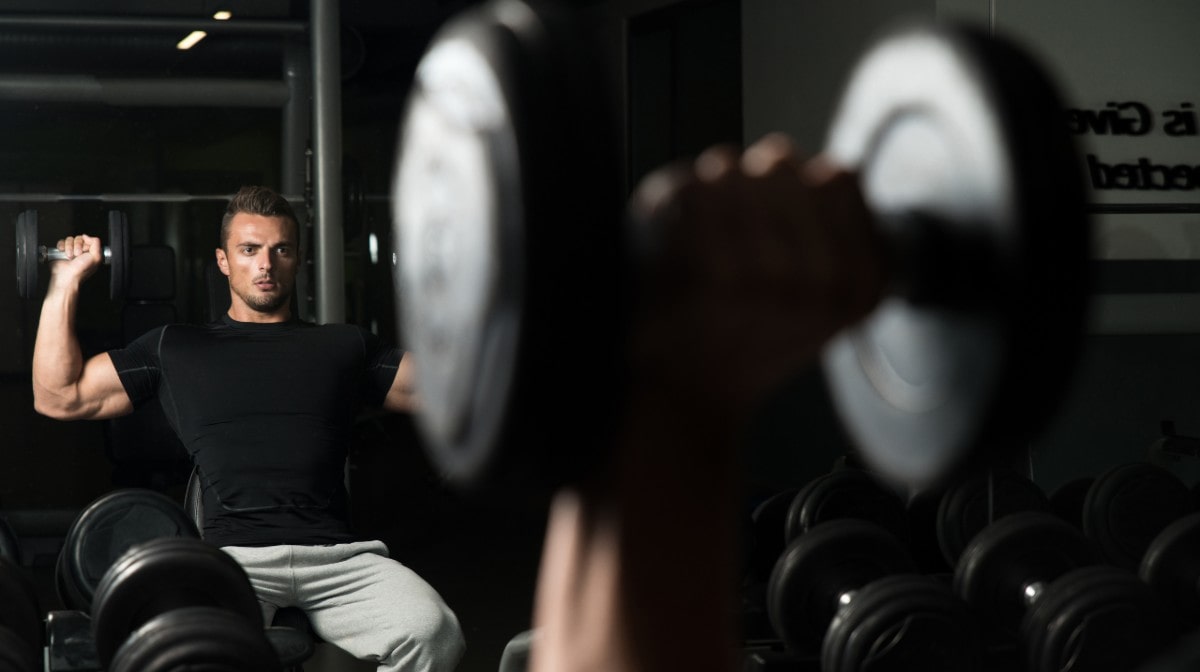
Dumbbell training is an effective way to build strength, improve muscle tone, and enhance muscular symmetry. Dumbbell exercises engage multiple muscle groups and allow for a wide range of movement. Whether you’re a beginner or an experienced athlete, incorporating dumbbells into your workout routine can provide numerous benefits.
Benefits of Dumbbells
Dumbbells allow you to train each side of your body independently. This helps you focus on proper movement patterns, strengthen both sides equally, and reduce muscle imbalances.
They also provide a greater range of motion across various exercises and muscle groups. This is one of the most effective ways to challenge your muscles and stimulate growth.
Additionally, when using dumbbells, you not only work the target muscles but also recruit stabilizing muscles to control and balance the weight.
This makes dumbbells an excellent tool for both strength and muscle-building workouts.
Using Dumbbells to Reach Your Goals
Weight Loss
Resistance training is a highly effective way to burn calories while building a strong, athletic physique. Adding dumbbell exercises to your routine can help improve body composition by reducing body fat while increasing muscle mass.
Of course, achieving this requires consistent training over weeks and months, along with a suitable nutrition plan and maintaining a calorie deficit.
Strength Development
Dumbbells can help reduce the stress that heavy loads place on your joints compared to barbell training.
As an added benefit, your stabilizing muscles become stronger because you must control two independently moving weights rather than a fixed bar.
Muscle Building
One of the major advantages of dumbbells is their ability to isolate specific muscle groups. While they are effective for compound movements, they are also excellent for developing muscles that may be lagging behind.
Limitations of Dumbbells
If you’re new to dumbbell training, it can be difficult to determine the appropriate weight for each exercise. Different exercises target different muscle groups and may require different loads, making weight selection a process of trial and error.
In general, the weight you choose should depend on the exercise, your technique, and your training goal. When in doubt, start with a lighter weight.
Safety Tips for Dumbbell Training
Always use proper lifting mechanics when picking up dumbbells from the floor or a rack. Bend at the hips and knees, keep your core engaged, and maintain a neutral spine.
As a rule, never sacrifice movement quality for quantity, whether that means more repetitions or heavier weights.
Both quality and quantity are important for achieving results, so give equal attention to each.
Watch yourself in a mirror or record your workouts to identify and correct mistakes. This will help you maximize your results and reduce the risk of injury.
Summary
Incorporating dumbbells into your training program is a highly effective way to build strength, improve muscular symmetry, and enhance overall fitness. Always prioritize safety, proper lifting technique, and correct exercise form to achieve the best results and minimize the risk of injury.