


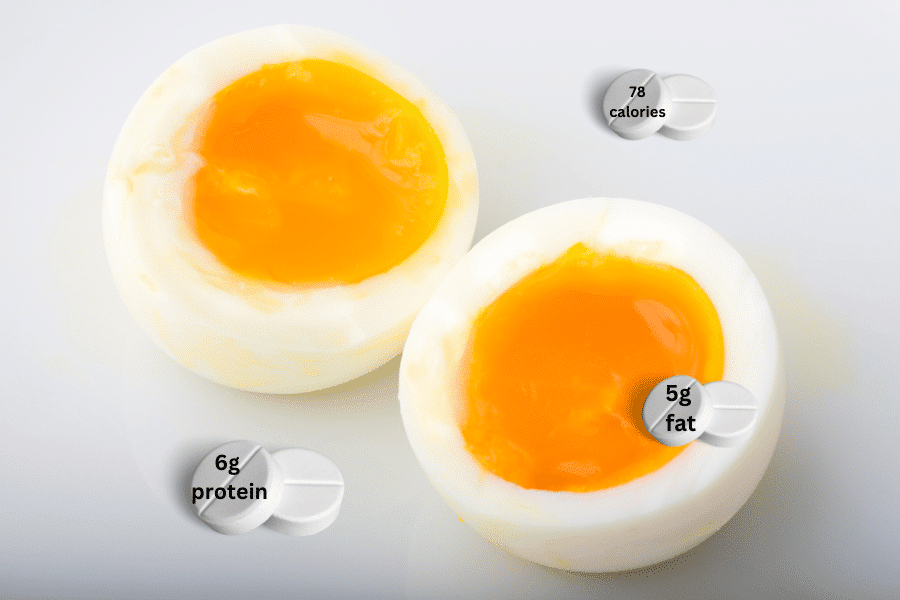
Eggs are nutrient-dense and have high nutritional value, meaning they provide a high amount of vitamins and minerals relative to their calorie content. Eggs are an excellent source of protein and choline, and they also contain several B vitamins along with vitamins A and D.
Nutritional facts of eggs
One large egg contains 77.5 calories, 5 grams of fat, less than 1 gram of carbohydrates, 6 grams of protein, and 147 mg of choline. The following nutritional information is provided by USDA for one large boiled egg (50 g):
- Calories: 77.5
- Protein: 6 g
- Fat: 5 g
- 1.3 g BCAA
- Choline: 147 mg
- Sodium: 62 mg
- Carbohydrates: 0.6 g
- Fiber: 0 g
- Sugar: 0.5 g
Protein
Eggs are a good source of high-quality, complete protein. One large egg white contains 4 to 5 grams of protein, 17 calories, and almost no fat. Egg whites are also a good source of leucine, an amino acid that may help with weight loss.
Fat
Each large egg contains 5 grams of fat. About 1.6 grams is saturated fat, and the rest is unsaturated and monounsaturated fat. Most of the fat in eggs is found in the yolk. The yolk contains about 55 calories of combined fat and protein.
Vitamins and minerals
Eggs provide important vitamins and minerals. They contain vitamin D (important for calcium absorption), phosphorus, vitamin A (for healthy vision, skin, and cell growth), and two B-complex vitamins needed to convert food into energy. Eggs are also an excellent source of riboflavin, selenium, and choline.
Benefits of eggs
Eggs provide many benefits, including high-quality protein, healthy fats, vitamins, and minerals.
Provide healthy fats
Although eggs contain saturated fat, they also provide unsaturated and monounsaturated fats, which are considered “good fats” because they may help reduce LDL (“bad”) cholesterol and support heart health.
To avoid increasing cholesterol, it is recommended not to consume more than one egg yolk per day.
Support eye health
Eggs contain carotenoids such as lutein and zeaxanthin, which help protect our eyes from macular degeneration (age-related vision loss).
Support brain health and development
Choline, which is found in high amounts in eggs, supports cognitive development in the womb and may also protect against age-related memory loss and other cognitive disorders.
Types of eggs
There is no nutritional difference between brown and white eggs (or eggs with different shell colors). However, some eggs may have higher nutritional value. For example, “omega-3 eggs” come from chickens fed flaxseed to increase omega-3 fatty acids in the eggs.
Nutritional values per 50 g (one large egg equivalent):
Goose egg: 105 calories, 7.8 g protein, 7.5 g fat (2 g saturated), 119 mg choline, 481 mg cholesterol
Duck egg: 105 calories, 7.2 g protein, 7.8 g fat (2.1 g saturated), 119 mg choline, 499 mg cholesterol
Quail egg: 79 calories, 6.5 g protein, 5.5 g fat (1.8 g saturated), 132 mg choline, 422 mg cholesterol
Egg allergy
Despite their benefits, eggs can sometimes cause problems. Egg allergy is one of the most common allergies, especially in children. Symptoms may include mild rashes or stomach pain, and in severe cases, anaphylaxis. If you suspect an egg allergy, consult a medical professional.
Egg storage
Store eggs in the refrigerator at 4°C or below. Eggs can usually be stored for about three weeks from the purchase date if they are fresh.
Since raw eggs may contain bacteria that cause foodborne illness, make sure to refrigerate them and cook them thoroughly:
Scrambled eggs and omelets should be cooked until no liquid egg remains.