



You may use light weights for different reasons, such as injury or a lack of interest in lifting heavy weights. But you might be wondering: can you really build muscle with light weights?
Studies have shown that lifting 60% of your one-rep max can be just as effective for muscle building as lifting heavy weights. You can improve your results by doing enough volume, training sufficiently, and consuming enough calories. You can also slow down the movement speed and add pauses to increase time under tension.
In this article, we define what “light weight” means. We also discuss which types of people benefit from light weights and how you can build muscle with them.
Some key definitions of light weights you should know:
a) Any weight you can perform more than 15 reps with before fatigue
b) Any weight that is 55–60% or less of your one-rep max
However, “light weight” is subjective and varies from person to person, exercise to exercise, and even equipment to equipment.
For example, what feels light for a squat may feel heavy for a shoulder press because squats use larger muscle groups.
Also, if you have been training for several years and can squat 200 kg, then 60 kg will feel light to you. But for beginners, the same 60 kg can feel heavy.
“Light” also depends on the equipment you use. A 20 kg empty barbell may feel light, but a 20 kg dumbbell can feel heavier due to differences in size and load distribution.
But the main question is: can you build muscle with light weights?
In a Brazilian study published in the journal PLOS One, participants were asked to perform either heavy sets of 7–9 reps or lighter sets of 21–36 reps. Both groups showed similar muscle growth.
According to research published in the journal Human Kinetics, researchers found no difference in muscle building between people who performed exercises up to 10 reps (heavier weights relative to the individual) and those who performed up to 20 reps (lighter weights relative to the individual).
Key point: You can build muscle with light weights when you perform enough volume. This means doing sets of more than 15 reps per exercise.
You may use light weights in the following situations:
1. You are a beginner
It is good to set goals and try to get stronger, but you should not rush results. New lifters have an advantage: they build muscle and strength very quickly. This is because their bodies are not yet adapted to resistance training and respond rapidly by increasing strength and muscle mass.
2. You are returning from injury or a break
If you are coming back from an injury, you may need to use light weights, and returning to your previous level takes time.
Too much stress can lead to re-injury.
If you have not been to the gym for months or even years, you cannot expect to perform as you did before. You must start lighter so your body can readapt and gradually return to its previous level or even better.
3. You are training for a different sport or goal that requires lighter loads
Speed is important in endurance sports such as running, marathons, or cycling. While strength training can be beneficial, you may not want to build too much muscle, as extra mass can reduce speed.
Having a low body fat percentage and lean mass can help you become faster and more efficient. While body fat is mainly reduced through diet, lifting light weights can help ensure you do not lose too much muscle from your activities.
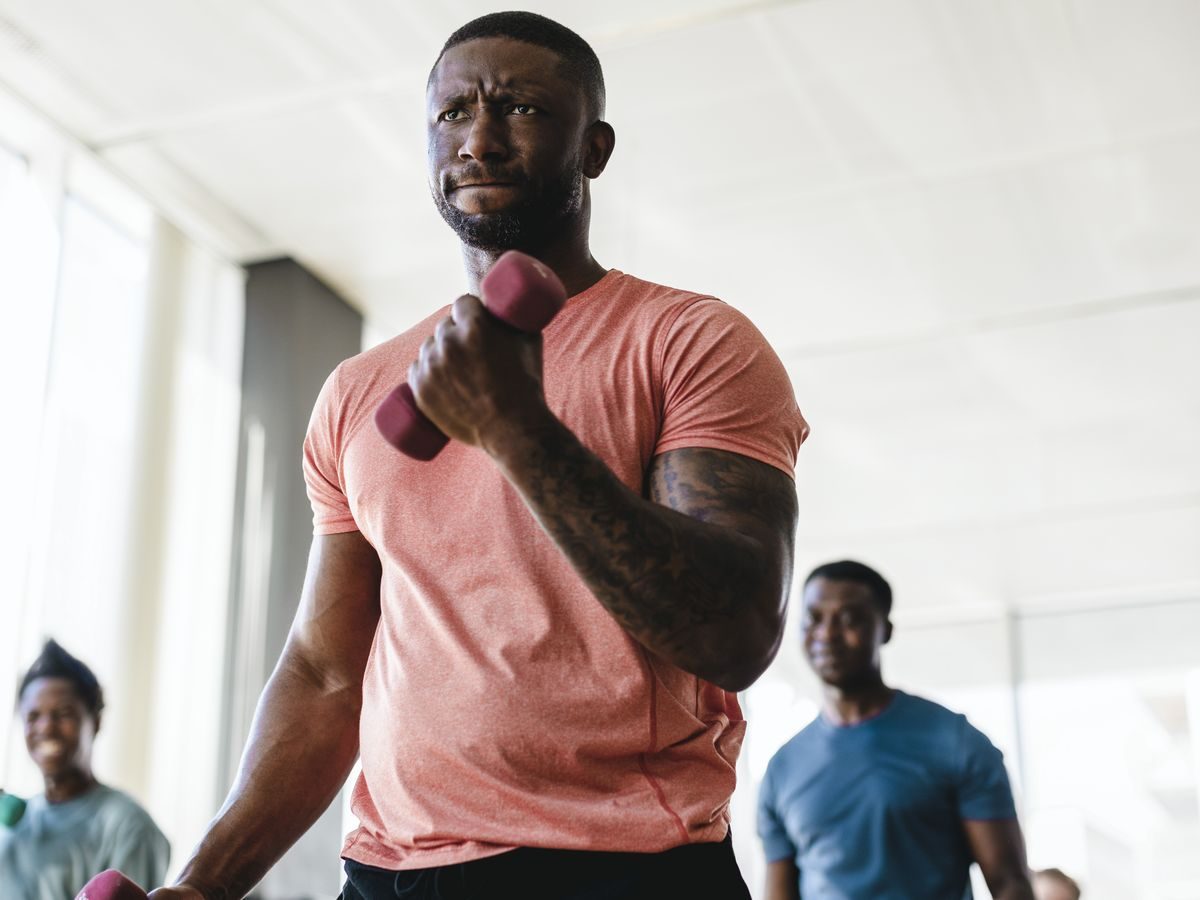
How to build muscle with light weights:
1. Focus on Time Under Tension (TUT)
Focus on controlled, slow movements during both the lifting and lowering phases to increase time under tension.
Slowing down is a great way to build muscle with lighter weights. For example, you can use a 3-second descent in squats, bench press, or lowering the bar in a deadlift.
2. Add pauses
Adding pauses increases tension, which helps build muscle with light weights. For example, you can add a 2-second pause at the bottom of a bench press.
3. Increase sets and reps
When using light weights, you need more sets and reps to achieve a similar training stimulus compared to heavy weights. This may mean performing sets of 15, 20, or even 30 reps.
You may also train to failure with a weight that is not extremely heavy, allowing you to perform at least 12–15 reps with proper form while the last reps are challenging.
You may also need to increase the number of sets per workout. If you normally do 2–3 sets, try increasing it to 4 or 5. Increasing training volume helps build muscle even when intensity is lower.
4. Use different grips
Try performing exercises with different grips and angles to target muscles in various ways.
5. Increase training days
If you train 2–3 times per week with light weights and do not feel enough stimulus, you can increase your training frequency to 4 or 5 days per week.
6. Maintain proper form
Since light weights are less challenging, you must pay close attention to your technique. Full range of motion ensures proper muscle engagement.
7. Use drop sets or supersets
Drop sets: Reduce the weight after reaching muscle failure.
Supersets: Combine exercises for opposing muscle groups with minimal rest.
Summary
By following all of the above factors—training enough, maintaining proper nutrition, using correct form, and applying time-based training techniques—you can build muscle with light weights.